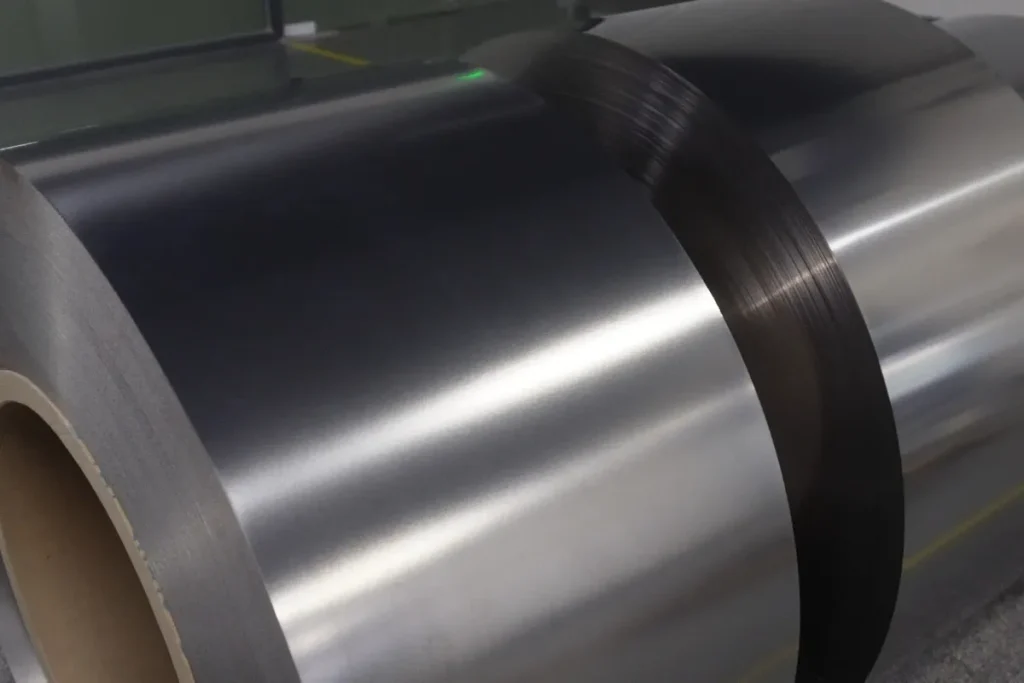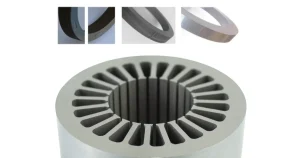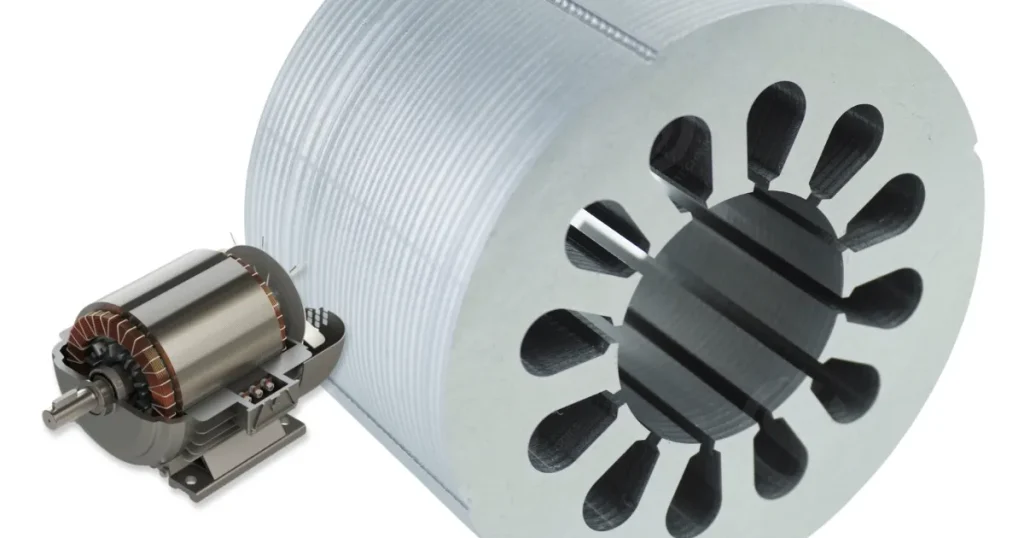
The efficiency of the stator core plays a vital role in determining motor performance and energy savings. By improving this efficiency, you can achieve significant benefits. Lower energy consumption reduces operational costs and enhances motor reliability. Moreover, increased energy efficiency contributes to environmental sustainability. It minimizes greenhouse gas emissions and decreases reliance on fossil fuels. Modern materials like amorphous steel and nanocrystalline alloys further optimize energy use, making motors more eco-friendly. These advancements not only support cost savings but also align with global efforts to reduce environmental impact.
Key Factors Affecting Stator Core Efficiency
Material Properties
Importance of high-quality magnetic materials
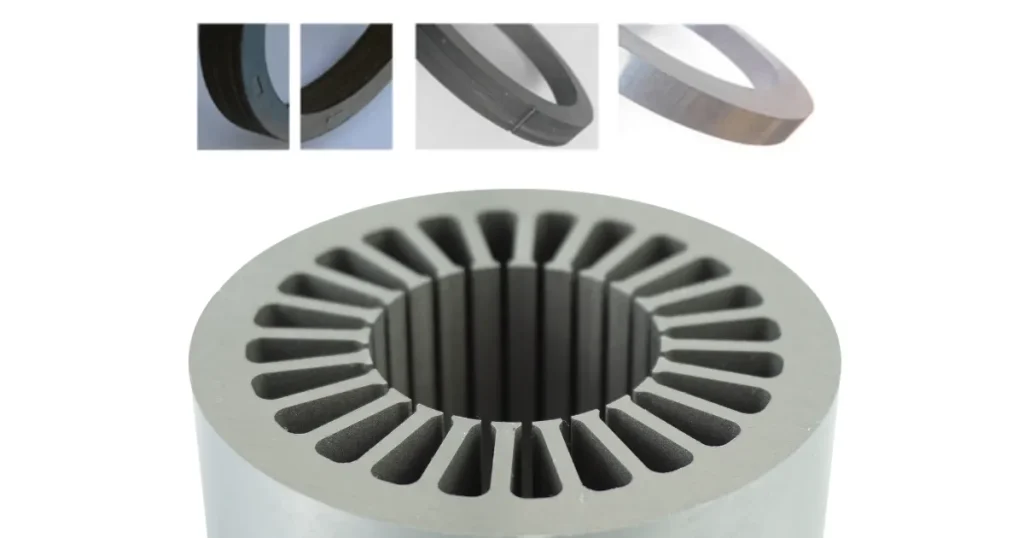
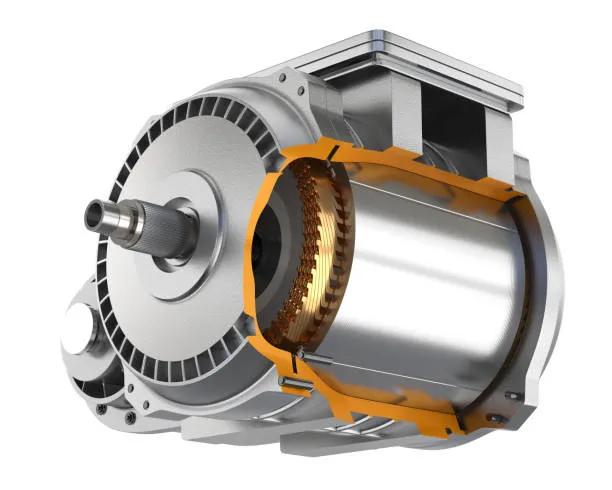
The materials used in a stator core directly influence its efficiency. High-quality magnetic materials minimize energy losses caused by eddy currents and hysteresis. Laminating the stator core reduces these losses, preventing excessive heating and improving energy conversion. Silicon, a key component in stator core manufacturing, plays a vital role in reducing hysteresis loss. This ensures efficient operation and minimizes energy wastage. However, the manufacturing process must avoid introducing mechanical stresses, as these can degrade the magnetic properties of the materials, especially in high-performance applications.
Role of silicon steel, amorphous metals, and nanocrystalline alloys
Selecting the right material is essential for achieving optimal stator core performance. Silicon steel offers good magnetic properties and moderate core losses, making it a cost-effective choice for many applications. Amorphous metals, with their lower core losses and excellent magnetic properties, are ideal for energy-efficient designs. Nanocrystalline alloys provide superior magnetic performance and very low core losses, making them suitable for advanced motor applications. The table below highlights the differences among these materials:
| Material | Core Losses | Magnetic Properties | Weight Reduction | Thermal Conductivity |
|---|---|---|---|---|
| Traditional Silicon Steel | Moderate | Good | Low | Moderate |
| Amorphous Steel | Low | Excellent | Moderate | High |
| Nanocrystalline Alloys | Very Low | Superior | Moderate | High |
Air Gaps and Magnetic Flux Path
Minimizing air gaps for better magnetic coupling
Air gaps in the stator core significantly affect motor efficiency. A smaller air gap improves magnetic coupling, enhancing the airgap flux density. This directly impacts motor performance, including torque and power loss. By minimizing air gaps, you can ensure better energy transfer and reduce inefficiencies in the magnetic flux path.
Optimizing flux path design to reduce energy losses
The design of the magnetic flux path plays a critical role in reducing energy losses. Variations in airgap flux density can affect the number of turns in the winding, which is crucial for maintaining voltage generation. Optimizing the flux path ensures consistent performance and minimizes unnecessary energy dissipation.
Lamination and Bonding Techniques
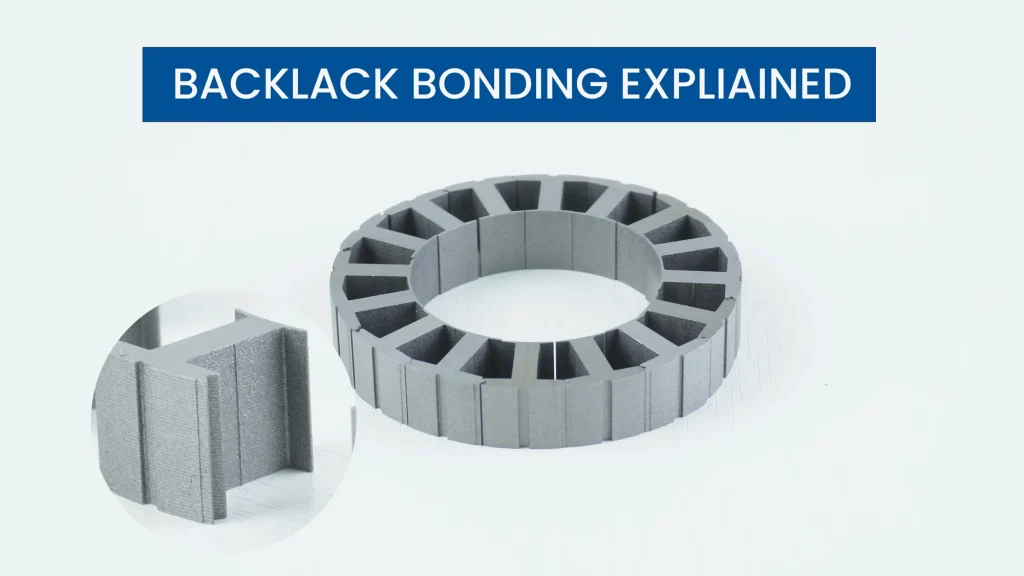
Benefits of self-bonding lamination technology
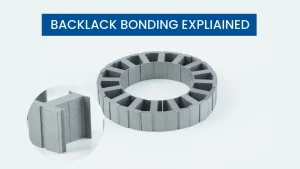
Self-bonding lamination technology offers several advantages for stator cores. It enhances mechanical strength and reduces vibration, leading to smoother operation. This technology also improves heat conduction, lowering motor temperature by 5-10℃. Additionally, it reduces noise levels by 5dB, making it ideal for applications like electric vehicles. The table below summarizes its benefits:
| Advantage | Description |
|---|---|
| High Intensity | Ensures durability with tensile shear strength of 14-18N/mm². |
| Reduce Vibration | Decreases vibration levels by 5%, improving operational stability. |
| Lower the Temperature | Enhances heat conduction, reducing motor temperature by 5-10℃. |
| Improve Efficiency | Increases motor efficiency and torque by 5%. |
| High Efficiency and Energy Saving | Reduces iron loss by 15-30%, leading to significant energy savings. |
Impact of lamination thickness on reducing eddy currents
Thinner laminations in the stator core reduce high-frequency eddy current losses. This improves motor efficiency and lowers power consumption. Laminations also minimize hysteresis loss, enhancing energy conversion. By using thinner laminations, you can achieve longer transmission distances with the same electrical capacity, making motors more efficient and reliable.
Practical Tips for Improvement
Selecting the Right Materials
Choosing low-loss magnetic materials for better performance
Selecting the right materials is crucial for improving the efficiency of your stator core. Low-loss magnetic materials, such as silicon steel, minimize energy losses by reducing eddy currents and hysteresis. Laminations play a vital role in this process by enhancing energy conversion efficiency and preventing heat buildup. Silicon steel, with its low carbon content, offers excellent magnetic permeability and reduced magnetization losses. High iron content in these materials ensures durability and formability, making them ideal for manufacturing efficient stator cores.
Evaluating cost vs. performance trade-offs in material selection
When choosing materials, you must balance cost and performance. While advanced materials like nanocrystalline alloys offer superior efficiency, they may increase production costs. Consider factors such as material resistivity, thickness, and surface quality. For instance, silicon, aluminum, and manganese content in materials can influence magnetic losses. By evaluating these trade-offs, you can select materials that meet your performance goals without exceeding budget constraints.
Reducing Energy Losses
Techniques to minimize eddy currents, such as thinner laminations
Eddy currents, induced by alternating currents in the windings, can lead to significant energy losses. Laminating the stator core is an effective way to address this issue. Thinner laminations reduce eddy current losses and improve energy conversion efficiency. This technique also minimizes hysteresis loss, which occurs due to the constant realignment of magnetic domains. By adopting these methods, you can enhance motor performance and reduce power consumption.
Addressing hysteresis losses through advanced materials
Hysteresis losses, caused by the repeated magnetization of the core, can impact motor efficiency. Advanced materials like soft magnetic composites (SMCs) and laminated silicon steel offer a solution. SMCs exhibit lower core losses at higher frequencies, making them ideal for high-performance motors. Laminated cores create smoother surfaces for magnetic domain realignment, reducing heat dissipation and improving energy efficiency. These materials ensure optimal performance in energy-efficient applications.
Optimizing Stator Core Design
Importance of precision in manufacturing processes
Precision in manufacturing directly impacts the performance of your stator core. High-quality production processes reduce energy wastage and enhance motor efficiency. Accurate manufacturing ensures consistent lamination thickness and alignment, which are critical for minimizing magnetic losses. By prioritizing precision, you can achieve better energy conversion and improve the reliability of your motors.
Using advanced simulation tools for design validation
Advanced simulation tools allow you to validate your stator core design before production. These tools help optimize the magnetic flux path and identify potential inefficiencies. By simulating real-world conditions, you can refine your design to achieve maximum efficiency. This approach reduces the risk of errors and ensures that your motor meets performance expectations.
Enhancing Mechanical Stability
Advantages of self-bonding laminations for rigidity and noise reduction
Self-bonding laminations significantly enhance the mechanical stability of the stator core. These laminations consist of thin steel sheets, often made from silicon steel, coated with an insulating material. This coating minimizes electrical losses caused by eddy currents and reduces noise during operation. By using self-bonding technology, you can achieve a noise reduction of up to 5dB. This improvement is particularly beneficial in urban environments where noise pollution is a concern. Quieter motors not only improve user experience but also align with modern standards for sustainable and comfortable living.
The rigidity provided by self-bonding laminations ensures consistent performance under demanding conditions. These laminations create a smooth surface that reduces hysteresis loss, facilitating efficient energy conversion. The uniform material properties and precise dimensions contribute to greater stability and precision. This structural integrity enhances the operational lifespan of motors, making them more reliable for high-speed or heavy-load applications. By adopting self-bonding laminations, you can optimize motor performance while minimizing maintenance requirements.
Reducing vibration and distortion in high-performance motors
Vibration and distortion can compromise the efficiency and durability of high-performance motors. Self-bonding laminations address these challenges by absorbing and dissipating vibrations effectively. Silicon steel laminations, with their excellent mechanical properties, prevent structural damage caused by fatigue. This feature ensures that your motor operates smoothly even under extreme conditions.
Enhanced mechanical stability reduces power loss by decreasing eddy currents and hysteresis loss. This improvement directly translates to higher energy efficiency. The structural design of motor laminations also minimizes distortion, ensuring consistent performance over time. By reducing vibration, you can achieve quieter operation and improved reliability. These benefits make self-bonding laminations an ideal choice for applications requiring precision and durability.
Tip: Incorporating self-bonding laminations into your motor design can significantly enhance energy efficiency, reduce noise, and extend the motor’s lifespan. Learn about Huaci’s self-bonding laminations core.
Common Challenges and Solutions

Eddy Current Loss
Causes of eddy currents in stator cores
Eddy currents occur when alternating magnetic fields induce circulating currents within the stator core. These currents generate heat and lead to energy losses. Insulation between laminations limits the area where eddy currents form, reducing their magnitude. However, weak spots in the laminations can create unintended electrical connections. These connections form circuit loops, which further induce circulating currents and exacerbate energy losses.
Solutions like thinner laminations and self-bonding techniques
You can mitigate eddy current losses by adopting effective solutions:
- Use thinner soft magnetic laminations in stator and rotor stacks. These laminations exhibit lower core losses, enabling higher continuous motor power.
- Studies reveal that thinner laminations reduce eddy current losses by up to 25%, as they limit the path of circulating currents and minimize heat loss.
- Implement self-bonding lamination technology to enhance insulation and mechanical stability, further reducing energy losses.
Hysteresis Loss
Understanding hysteresis and its impact on efficiency
Hysteresis loss arises during the magnetization and demagnetization cycles of the stator core. This loss wastes energy and increases operational costs. The size of the hysteresis loop determines the energy consumed. Larger loops result in higher energy waste, reducing motor efficiency. Laminations in the stator core provide smoother surfaces, requiring less energy for these cycles. This improves energy conversion efficiency and reduces overall losses.
Mitigating hysteresis through material advancements
Advanced materials like nanocrystalline alloys and amorphous metals offer solutions to hysteresis loss. These materials exhibit superior magnetic properties and lower core losses. By incorporating these materials into your motor design, you can achieve better energy efficiency and reduce operational costs.
Heat Dissipation
Challenges in managing heat in high-performance motors
High-performance motors generate significant heat due to power losses in components like semiconductors. This heat can degrade performance, reduce efficiency, and damage critical components. Effective thermal management becomes essential to prevent these issues.
Solutions like better cooling systems and thermal management
To address heat dissipation challenges, consider implementing advanced cooling systems. Liquid cooling and forced air systems effectively manage heat in high-performance motors. Additionally, thermal management techniques, such as using materials with high thermal conductivity, help dissipate heat more efficiently. These solutions ensure consistent motor performance and extend the lifespan of critical components.
Future Innovations in Stator Core Efficiency
Emerging Materials
Advances in amorphous metals and nanocrystalline alloys
Emerging materials like amorphous metals and nanocrystalline alloys are transforming stator core efficiency. Amorphous steel minimizes eddy current losses, enhancing energy conversion. Nanocrystalline alloys, with their superior magnetic properties, reduce core losses significantly. These materials are ideal for high-frequency applications, offering energy savings and lower operational costs.
| Material | Core Losses | Magnetic Properties | Weight Reduction | Thermal Conductivity |
|---|---|---|---|---|
| Amorphous Steel | Low | Excellent | Moderate | High |
| Nanocrystalline Alloys | Very Low | Superior | Moderate | High |
By adopting these materials, you can achieve higher efficiency and reliability in your motor designs.
Potential of superconducting materials for efficiency gains
Superconducting materials hold immense potential for future motor applications. These materials eliminate electrical resistance, enabling near-perfect energy transfer. While still in the research phase, superconductors could revolutionize stator core design by drastically reducing energy losses and improving overall performance.
Advanced Manufacturing Techniques
Benefits of automated bonding and lamination processes
Automated bonding and lamination processes streamline manufacturing. These methods eliminate preparation time and reduce complexity by removing the need for additional adhesive components. They also lower scrap rates, ensuring consistent quality.
| Benefit | Description |
|---|---|
| Elimination of Preparation Time | Removes time-consuming preparation steps. |
| Reduced Complexity | Simplifies inventory management by eliminating extra adhesive components. |
| Lower Scrap Rates | Reduces waste due to fewer errors in adhesive application. |
These advancements improve production efficiency and ensure high-quality stator cores.
Improving the efficiency of the stator core requires a strategic approach. Focus on selecting advanced materials like silicon steel, amorphous steel, and nanocrystalline alloys to minimize energy losses. Optimize design by using precise lamination thicknesses between 0.01 and 0.35 mm and controlling the crystalline microstructure. Transitioning to these innovations enhances motor performance and reduces operational costs.
FAQ
What is the primary purpose of a stator core in a motor?
The stator core generates a magnetic field that interacts with the rotor to produce motion. It ensures efficient energy conversion by minimizing losses like eddy currents and hysteresis. Selecting high-quality materials and optimizing design enhance its performance.
How does lamination thickness affect motor efficiency?
Thinner laminations reduce eddy current losses by limiting circulating currents. This improves energy conversion and minimizes heat generation. Using precise lamination thicknesses, such as 0.35 mm, ensures better performance and reliability in high-efficiency motors.
Why is self-bonding lamination technology important?
Self-bonding laminations improve mechanical stability, reduce vibration, and lower noise levels. They enhance energy efficiency by minimizing magnetic losses and ensuring consistent performance. This technology also eliminates the need for additional adhesives, simplifying manufacturing processes.