In today’s competitive motor design landscape, optimizing efficiency and performance is more critical than ever. The motor core assembly method—whether bonded, riveted, or welded—significantly influences energy conversion, thermal management, and overall durability. This comprehensive guide compares all three methods to help engineers make informed decisions.
Key Takeaways
- Bonded Cores Offer Superior Efficiency: Self-bonding technology can reduce eddy current losses by up to 25% and improve motor efficiency by 5-15% compared to traditional methods.
- Welding Has Thermal Trade-offs: While strong, welding can increase core losses by up to 10% due to heat damage to lamination insulation.
- Riveting Prioritizes Repairability: Best for applications requiring maintenance, but creates stress concentrations that affect magnetic properties.
- Application-Specific Choice: Aerospace and EV applications benefit from bonding; industrial machinery may prefer riveting for maintenance access.
- Total Cost of Ownership: Bonding has higher initial costs but lower TCO due to improved efficiency and reduced maintenance.
Motor Core Assembly Methods: Quick Comparison
| Method | Eddy Current Losses | Efficiency | Repairability | Cost | Best For |
|---|---|---|---|---|---|
| Bonded | Lowest | Highest (5-15% better) | Difficult | Higher initial | EVs, Aerospace, High-efficiency |
| Welded | High (+10%) | Good | Difficult | Medium | High-stress applications |
| Riveted | Medium | Moderate | Easy | Low | Serviceable motors |
Importance of the Motor Core in Motor Performance
The motor core is the beating heart of every electric motor, and its quality directly influences overall performance. In modern designs, precision in core assembly is critical—not only for ensuring energy efficiency but also for achieving superior torque output and long operational life.
When discussing the bonded motor core assembly process, engineers often note that an optimized core reduces eddy current losses and improves magnetic flux optimization. In practical terms, a well-constructed core can lower energy losses by 15% or more, directly translating to enhanced efficiency in electric vehicles and aerospace applications.
One case study from an industrial motor manufacturer revealed that upgrading from a conventional welded core to a bonded core resulted in a 10% improvement in overall system efficiency, along with reduced temperature rises during operation.
Self-Bonded Motor Core
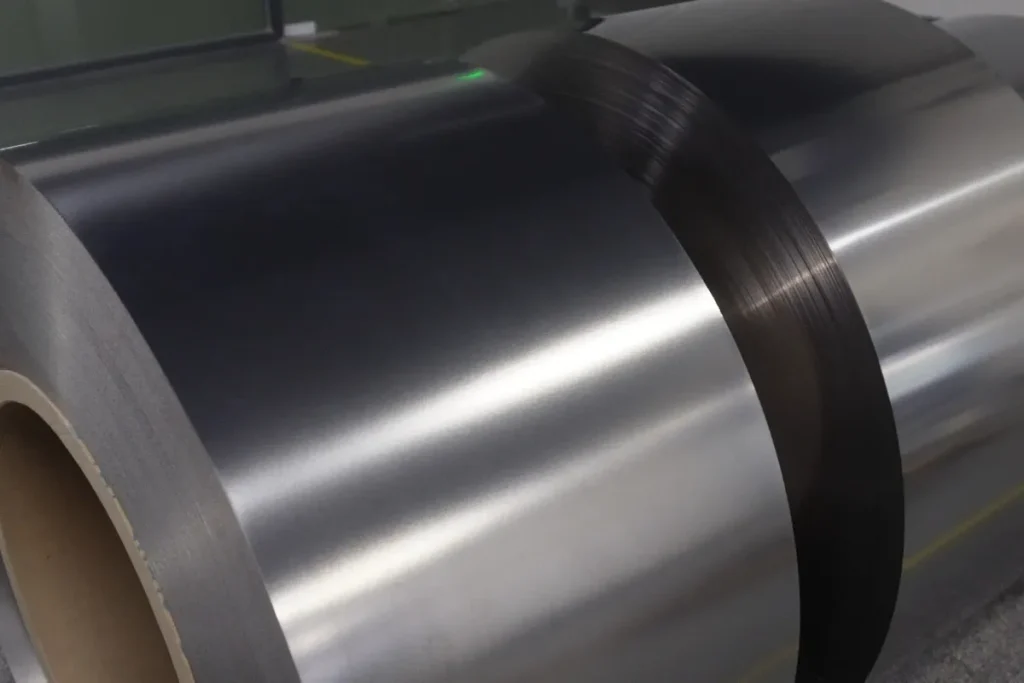
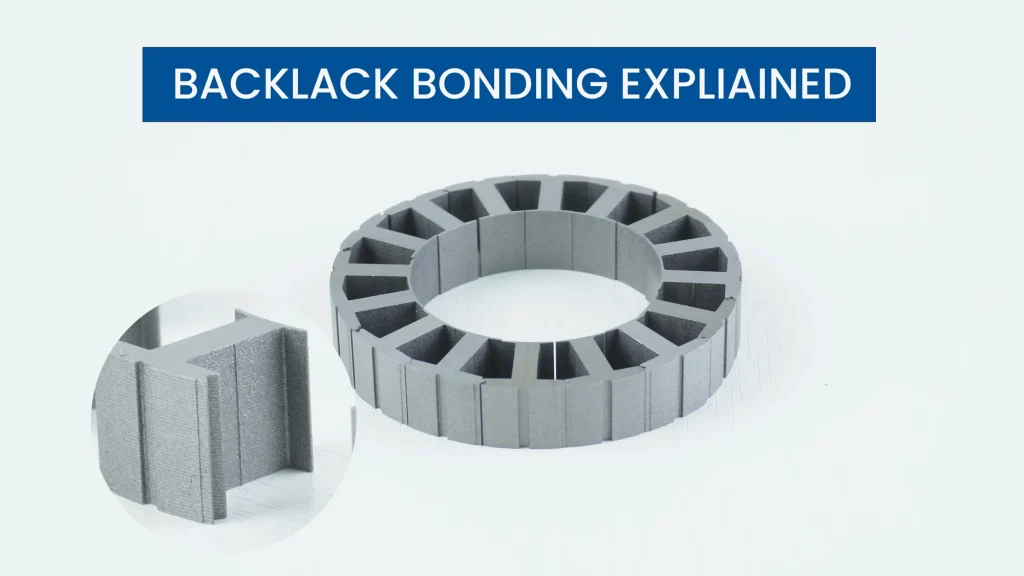
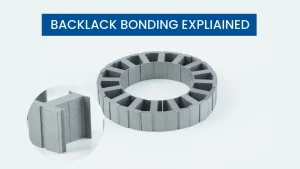
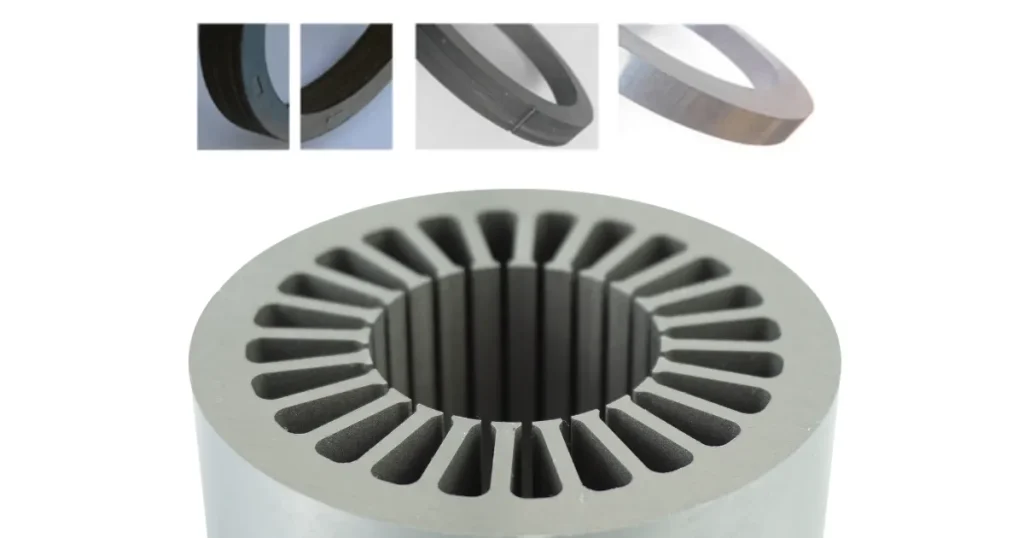
Self-bonded motor core assembly is a cutting-edge technique that uses adhesives to join individual motor laminations into a single, cohesive core. The process begins with precision-cut silicon steel sheets that are pre-coated with a specialized bonding varnish.
The Bonding Process
- Coating Application: Electrical steel sheets receive an even layer of bonding varnish via roll coating.
- Initial Curing: Partial cure sets the coating for handling while remaining reactive.
- Cutting and Shaping: Laminations are stamped or laser-cut to desired geometry.
- Stacking: Laminations are stacked in precise alignment fixtures.
- Final Curing: Heat and pressure activate full bonding.
- Quality Control: Electrical, mechanical, and dimensional verification.
Advantages of Bonded Cores
- Superior Efficiency: Stacking coefficients above 98.5% minimize air gaps and eddy current losses.
- Uniform Stress Distribution: Full-surface bond eliminates localized stress concentrations.
- Excellent Thermal Management: Adhesive layer improves heat dissipation.
- Noise Reduction: Damping properties reduce vibration and acoustic noise by up to 20%.
- Dimensional Stability: Parallelism errors less than 0.05 mm in many instances.
Research from Emobility-engineering reported that adopting self-adhesive bonding reduced assembly time and lowered core loss by nearly 15%.
Applications for Bonded Cores
- Aerospace: Aircraft generators and APUs requiring high reliability under extreme conditions.
- Electric Vehicles: EV and eVTOL motors where efficiency directly impacts range.
- Industrial Automation: Precision environments requiring stable motor parameters.
- Consumer Electronics: High-end appliances benefiting from quiet operation.
Riveted Motor Core
Riveted motor core assembly uses mechanical fasteners to join laminated sheets. Pre-drilled holes are made in each lamination, and rivets mechanically secure the layers together.
Advantages of Riveting
- Easy Disassembly: Ideal for applications requiring maintenance access.
- Lower Equipment Cost: Basic riveting tools are widely available.
- No Heat Processing: Avoids thermal damage to insulation.
- Simplified Manufacturing: No complex curing cycles required.
Disadvantages of Riveting
- Stress Concentrations: Hole punching creates weak points affecting magnetic properties.
- Reduced Magnetic Efficiency: Rivet holes interrupt magnetic flux paths.
- Vibration Issues: Discontinuities at rivet sites can initiate vibration and fatigue.
Welded Motor Core
Welded motor core assembly uses MIG, TIG, or laser welding to fuse lamination edges. This creates a permanent, continuous joint with high strength.
Advantages of Welding
- High Strength: Creates robust, permanent joints.
- Seamless Appearance: Clean, continuous bond line.
- Established Process: Well-understood technology with available expertise.
Disadvantages of Welding
- Thermal Damage: Heat can degrade inter-lamination insulation, increasing eddy current losses by up to 10%.
- Distortion Risk: Excessive heat causes warping and dimensional issues.
- Localized Joints: Unlike bonding’s full-surface connection, welding creates discrete bond points.
- Difficult Repair: Permanent joints prevent disassembly.
Performance Comparison
Efficiency and Core Losses
Bonded cores offer the lowest eddy current losses due to uniform full-surface bonding. Research indicates bonded cores can reduce losses by up to 25% compared to traditional methods. Welded cores may see 10% higher losses due to insulation damage. Riveted cores fall in between, with stress concentrations affecting magnetic flux.
Structural Integrity and Vibration
Bonded cores excel in vibration damping thanks to the adhesive layer’s damping properties. One automotive application showed 20% reduction in vibrational noise compared to riveted counterparts. Welded cores offer rigidity but may develop micro-distortions. Riveted cores are most susceptible to vibration-related fatigue.
Cost Considerations
While bonding has higher upfront costs for specialized equipment and materials, the total cost of ownership often favors bonded cores due to:
- Reduced energy losses over motor lifetime
- Lower maintenance requirements
- Extended operational life
- Fewer warranty claims
Decision Guidelines
When selecting a motor core assembly method, consider:
- Performance Requirements: Prioritize efficiency gains over initial cost for high-value applications.
- Maintenance Needs: If regular service is required, riveting offers easier access.
- Application Environment: Aerospace and EVs benefit from bonding; industrial machinery may prioritize repairability.
- Volume Production: Bonding becomes more cost-effective at scale.
- Partner Capabilities: Choose suppliers with advanced quality control systems.
Conclusion
The choice between bonded, riveted, and welded motor cores involves trade-offs between efficiency, cost, repairability, and application requirements. Bonded cores excel in high-efficiency applications like EVs and aerospace. Riveted cores suit applications requiring maintenance access. Welded cores provide strength for high-stress applications but require careful thermal management.
For most modern high-performance applications, bonded motor cores offer the best combination of efficiency, reliability, and long-term value.
Frequently Asked Questions
Which motor core assembly method is most efficient?
Bonded motor cores are the most efficient, reducing eddy current losses by up to 25% compared to traditional methods. The full-surface adhesive bond eliminates air gaps and maintains optimal magnetic properties throughout the core.
Why does welding increase core losses?
Welding generates heat that can damage the insulation coating between laminations. When this insulation is compromised, eddy currents can flow more freely between laminations, increasing energy losses by up to 10%.
When should I choose riveted motor cores?
Riveted cores are ideal for applications where maintenance access is critical, such as industrial motors that require periodic servicing. The ability to disassemble the core for repairs or inspections can outweigh the efficiency trade-offs in these scenarios.
Is bonded motor core technology suitable for high-volume production?
Yes, bonded cores become increasingly cost-effective at higher volumes. While initial equipment investment is higher, the per-unit cost drops significantly in mass production due to reduced rework, consistent quality, and automated processes.
What materials work with self-bonding technology?
Most electrical steel grades are compatible with self-bonding coatings, including various silicon steel grades. Some soft magnetic alloys like 1J22 can also be used with appropriate bonding formulations.
Learn more about motor core manufacturing and how Huaci Technologies can help optimize your motor designs with advanced bonding technology.